
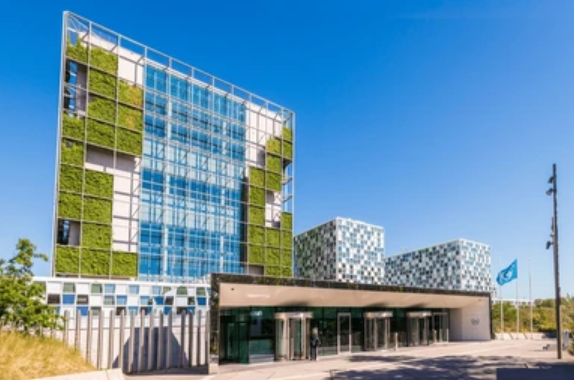
Institutional Crisis: ICC Executive Committee Suspends Chief Prosecutor Pending Misconduct Probe
THE HAGUE — The International Criminal Court (ICC) has been thrust into an unprecedented institutional crisis. The court’s governing body, the Bureau of the Assembly of States Parties, has officially suspended Chief Prosecutor Karim Khan “with immediate effect.” The drastic measure follows an intense, 18-month internal disciplinary investigation into allegations of serious personal misconduct, including claims of non-consensual sexual harassment involving a female staff member within his office.
The executive bureau, composed of representatives from 21 member states, confirmed it has officially referred the findings of the independent UN-led review directly to the wider Assembly of States Parties. A special legislative session involving all 125 member nations will be urgently convened, where a secret ballot will determine whether Khan will be permanently removed from his high-profile judicial post. A majority vote of 63 nations is required to formally terminate his tenure.
Khan’s legal team issued a fierce rejoinder immediately following the announcement, rejecting the suspension in the strongest possible terms. His defense labels the bureau’s decision as “unlawful, procedurally unfair, and entirely unsupported by credible evidence,” maintaining that the prosecutor has consistently denied any wrongdoing since the third-party allegations were first brought to light. While the court emphasizes that the interim suspension is an administrative safeguard and “not an indication of the final outcome,” the public damage to the institution’s leadership structure is already profound.
The timing of this internal collapse could not be more volatile for the court’s global standing. The Office of the Prosecutor is currently navigating some of the most politically explosive dossiers in modern legal history, including active war crimes investigations in Eastern Europe and the Middle East. The court has been operating under immense external pressure, including heavy diplomatic pushback and targeted financial sanctions from Washington following Khan’s 2024 push for arrest warrants against top international political leaders.
With Khan sidelined, the day-to-day operations of the prosecution have fallen entirely onto his deputies. Senior legal analysts express deep concern that a prolonged, highly publicized political battle over the prosecutor’s personal conduct will stall crucial judicial milestones and severely undermine the court’s moral authority.
Civil society organizations and human rights watchdogs are demanding total transparency throughout the upcoming member-state vote, arguing that the international community’s faith in global justice rests on the ICC proving it can hold its own highest officials to the exact same standards of accountability it demands of the world.



Leave a Reply